
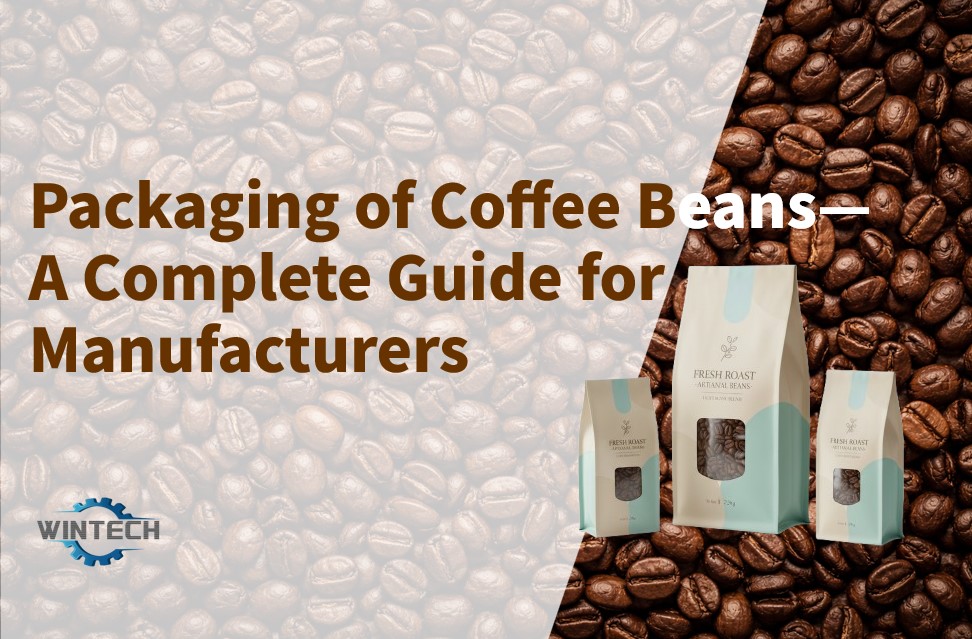
Coffee is more than just flavor and aroma—it’s also about presentation. The packaging of coffee beans plays a critical role in preserving freshness and influencing buying decisions. With 70% of consumers influenced by packaging design, understanding what goes into effective coffee packaging can help elevate your brand and control costs.
In this article, we’ll explore the essential packaging elements, styles, materials and the importance of precision filling for cost efficiency.
Packaging of Coffee: 8 Common Formats and Their Best Uses
Packaging of coffee beans must protect the beans from air, light, and moisture—elements that can quickly degrade flavor and aroma. Beyond protection, packaging also plays a vital role in branding and customer perception. Among the many packaging options available, the following formats are most suitable for roasted whole beans:
● Flat Bottom Bags
Flat bottom bags are known for their sturdy, self-standing design that offers five sides for branding, making them a popular choice for premium retail coffee. Their box-like structure provides a polished look and accommodates larger label designs, enhancing shelf appeal.
● Stand-Up Pouch
Stand-up pouches, often called doypacks, are highly flexible and come with resealable zipper closures. These are ideal for direct-to-consumer brands or subscription services thanks to their portability and user-friendly opening and sealing features.
● Gusseted Bags
Gusseted bags are a traditional and affordable packaging choice. While they offer a familiar look and good value, their structure makes filling and stacking less efficient, making them better suited for brands that prioritize tradition and cost over speed.
● Quad Seal Bags
Quad seal bags have a similar upright look to flat bottom bags but feature sealed side panels that create a more structured, premium appearance. This design enhances durability and shelf presence, making it popular among high-end coffee brands. Typically sealed with a tin tie or tape, quad seal bags are more costly but offer a refined packaging option.
While the following formats are also widely used in coffee packaging, they are generally better suited for instant coffee, ground coffee, or single-serve applications—not for packaging whole beans. Their structures may lack degassing valves, airtightness, or sufficient barrier protection, making them less ideal for preserving the integrity of roasted beans.
● Flat Pouches
Flat pouches are compact and sleek, typically used for single-serve or sample-sized portions. They are lightweight and easy to distribute, making them suitable for promotional use or for hotels and travel kits.
(Related article: Understanding 3 Different Types of Pouches: The Ultimate Guide)
● Pillow Bags
Pillow bags are the most cost-effective option, commonly used in foodservice settings like offices or restaurants. Their flat, sealed design minimizes material use and simplifies bulk packaging. However, they usually lack degassing valves and resealability, making them less ideal for freshly roasted coffee.
● Sachets
Sachets are individually sealed small packages often used for instant or single-serve coffee. Many are nitrogen-flushed to preserve flavor, making them convenient and portable without compromising quality.
● PET Jars/Metal Cans
PET jars and metal cans offer rigid protection and a premium feel. Their light-blocking properties and durable structure make them ideal for gift sets or high-end retail displays, although they do occupy more storage space and have higher production costs.
| Packaging Type | Suitable for Whole Beans | Notes |
| Flat Bottom Bags | ✔ Yes | Ideal for retail, strong structure |
| Stand-Up Pouch | ✔ Yes | Resealable, great for DTC brands |
| Gusseted Bags | ✔ Yes | Traditional, affordable |
| Quad Seal Bags | ✔ Yes | Premium look, more costly |
| Pillow Bags | ▲ Limited | Good for foodservice, not resealable |
| Flat Pouches | ▲ Limited | Best for samples or hotel kits |
| Sachets | ✘ No | Designed for instant/single-serve use |
| PET Jars / Cans | ▲ Special Use | Suitable for gifts, costly and bulky |
Packaging of Coffee Beans: Essential Features for Quality and Freshness
Coffee freshness can deteriorate quickly without the right features. The following elements play a major role in maintaining bean quality, usability, and sustainability:
● Degassing Valves
Degassing valves are one-way valves that allow carbon dioxide to escape from freshly roasted coffee beans while preventing oxygen from entering the package. This feature is crucial for preserving flavor and preventing bag rupture due to gas buildup. It has become a standard expectation among quality-conscious consumers.
● Gas Flushing
Gas flushing is a process in which the packaging environment is filled with an inert gas, typically nitrogen, to displace oxygen. Since oxygen is a major culprit in coffee degradation, this technique significantly extends shelf life and ensures that the beans remain flavorful for longer periods.
(Related article: Nitrogen Gas for Food Packaging: Why It’s Used and How It Works)
● Vacuum Sealing and Top Seal Integrity
Vacuum sealing involves removing air from the packaging before sealing, creating a low-oxygen environment that prolongs freshness. High-quality top seal integrity is also essential to prevent leaks and recontamination, especially during storage and transport.
● Resealable Closures
To enhance user convenience and product longevity, resealable closures such as zippers or tin ties are widely used. They allow consumers to open and close the packaging multiple times without compromising the freshness of the remaining coffee inside.
● Portability and Light-Proofing
Portability and protection against light are also key factors. Coffee beans are sensitive to UV light, which can break down oils and degrade flavor. Packaging materials that are lightweight yet opaque or UV-resistant help maintain quality and offer consumer convenience.
● Comparing Materials
In addition to structural features, the choice of packaging material plays a critical role in freshness retention, sustainability, and overall brand presentation. There are three commonly used materials in packaging of coffee beans: kraft paper, multi-layer composites, and aluminum foil.
- Kraft Paper
Kraft paper is frequently used due to its affordability and environmentally friendly appeal. It offers a rustic aesthetic that resonates with eco-conscious consumers but provides limited protection against oxygen and moisture.
- Multi-layer Composites
Multi-layer composites offer a balanced solution. These materials typically combine layers of plastic films and foil, resulting in durable packaging that offers strong barriers to oxygen, moisture, and UV light. Additionally, they allow for high-quality printing and design flexibility, making them a favorite for brands seeking customization.
- Aluminum Foil
Aluminum foil, often used as a liner in composite packaging, provides the highest level of barrier protection. It effectively blocks air, moisture, and light, making it ideal for maintaining the integrity of premium coffee products. Though less environmentally friendly, its functional superiority makes it indispensable in many high-end packaging formats.
Automated Filling Solutions: Ensuring Precision and Cost Control
Beyond design and materials, precision in the filling process is vital. Inconsistent filling not only affects the customer experience but also adds up to significant cost waste over time. Accurate filling ensures every coffee bag meets the stated weight, supporting production efficiency, legal compliance, and brand trust.
● Auger Filling Machines for Coffee Powder
One of the most commonly used systems for ground coffee is the auger filling machine, which dispenses coffee powder using a screw mechanism. This method is especially suitable for fine powders because it provides consistent volume dosing with minimal product spillage.
● Checkweighers and Real-Time Inspection Systems
To ensure accuracy, many facilities also use checkweighers and real-time inspection systems. These machines verify the final weight of each package after filling and can automatically reject under- or overweight bags from the production line. This real-time feedback loop helps reduce waste and prevents non-compliant products from reaching consumers.
● Weigh and Fill Machine
For roasted whole beans, a weigh and fill machine is often the preferred solution. These machines typically use load cells to measure each dose precisely before releasing it into the bag. With high accuracy and features like PLC integration, multi-product memory settings, and intuitive HMI touchscreens, they ensure consistent output across both retail and wholesale packaging. Watch this video to see how the machine operates in a real production environment.
● Vertical Form Fill Seal (VFFS) Systems
Vertical Form Fill Seal (VFFS) machines are a popular solution for automated coffee bean packaging, especially in medium to high-volume production lines. These machines integrate bag forming, filling, and sealing into a vertical process that supports speed and consistency.
VFFS systems work well with formats like pillow bags, gusseted bags, and quad seal bags, and can be paired with multi-head weighers or linear scales for accurate filling. Advanced features like degassing valve insertion, nitrogen flushing, and resealable zipper options help maintain coffee bean freshness while improving operational efficiency.
For coffee brands seeking scalable, cost-effective packaging with consistent quality, VFFS is a proven choice.
Quick Selection Guide: Matching Your Coffee Product to the Right Equipment
Choosing the optimal packaging machinery depends heavily on your product’s characteristics—specifically flowability and particle size. Whether you are handling free-flowing coffee beans or fine powder, selecting the right equipment is crucial for maintaining precision and seal integrity.
Use the comparison table below to identify the recommended models, accuracy levels, and applicable bag styles for your production line.
| Product Type | Flowability | Recommended Equipment | Accuracy | Applicable Bag Types | Key Features |
| Coffee Beans | Good | Linear Weigher (SF Series) + VFFS | 0.1% – 2% | 3-Side Seal, 4-Side Seal, Pillow Bag (Back Seal), Easy Tear, Round Corner | Gentle Feeding: High speed without damaging bean integrity. |
| Coffee Powder | Medium | Auger Filler (AF Series) + VFFS | 0.1% – 2% | 3-Side Seal, 4-Side Seal, Pillow Bag (Back Seal), Easy Tear, Round Corner | Dust-Proof Design: Stable and precise filling for fine powders. |
Note: To fully optimize your production line, we also offer a range of optional equipment—including vibratory/vacuum feeders for automated material supply, nitrogen flushing to preserve freshness, and checkweighers/metal detectors for strict quality control.
Success Story: Achieving 400% Efficiency Boost in Granule Packaging
While the product may differ, the packaging challenge remains the same: achieving high precision at high speeds for granular products.
Just like roasted coffee beans, premium pet food requires gentle handling and exacting weight control. In a recent project for Natural Balance (Taiwan Distributor), we utilized the SF1003—which features the same SF Series linear weigher technology recommended for coffee beans—to transform their production line.
The results of Wintech’s automation:
-
- 400% Capacity Boost: Daily output increased from 1,000 to 4,000 bags.
-
- Precision Control: Filling accuracy improved from ±3–5% to ±0.5%.
-
- Cost Reduction: Labor requirements dropped from 6 operators to just 1–2 operators per line.
This success story demonstrates that whether you are packaging pet food or premium coffee beans, Wintech’s weighing technology delivers the stability and efficiency your brand needs.
Coffee Packaging FAQs
Q1. What’s the difference between film roll packaging and pre-made coffee bags?
A1: Film roll packaging uses form-fill-seal (FFS) technology to create bags from roll stock during the packaging process. It’s cost-effective and offers high production flexibility. On the other hand, pre-made bags come in various premium formats—such as flat bottom or quad seal bags—and often deliver a more polished, retail-ready appearance, making them ideal for specialty or high-end coffee brands.
(Related article: What Is Roll Stock Packaging? How It Differs from Pouches?)
Q2. How does the packaging of coffee beans protect against light, air, and oxidation?
A2: To prevent oxidation and aroma loss, coffee is typically packaged using multi-layer composite films or aluminum foil materials. These bags are often equipped with one-way degassing valves, nitrogen flushing systems, or vacuum sealing—all of which help preserve freshness by keeping out oxygen, light, and moisture.
Q3. Are vacuum-sealed bags better than other coffee packaging types?
A3: Vacuum packaging removes air from the bag, significantly reducing oxidation and extending shelf life. It’s highly effective for preserving freshness and flavor, but typically comes with higher packaging costs and may not be necessary for all product types. Brands must balance cost with desired freshness levels and shelf expectations.
Q4. Why is immediate packaging important for roasted coffee?
A4: Once roasted, coffee beans and ground coffee begin to lose aroma and flavor when exposed to air. Timely packaging is essential to maintain product quality. However, freshly roasted beans release carbon dioxide for several hours or days. That’s why many coffee bags feature one-way exhaust valves, allowing internal gas to escape without letting oxygen in—preserving freshness without over-pressurizing the package.
Choose Wintech for Coffee Packaging: Where Efficiency Meets Expertise
At every stage of the packaging of coffee beanscoffee packaging, Wintech stands by the principles of automation, precision, and efficiency—offering reliable solutions tailored to the needs of coffee brands and manufacturers.
Whether you require an auger filling machine for accurate dosing of coffee powder, a vibratory weight filling machine for flexible and precise granular filling, or a checkweigher to ensure consistent product quality, Wintech provides professional equipment and technical support customized for coffee production lines.
With features like multi-speed adjustment, quick memory-based product switching, and smart error detection, our solutions help clients reduce production time, enhance flexibility, and control costs while ensuring high product consistency. Backed by years of experience in automation equipment, Wintech has empowered numerous coffee brands to build efficient, customized packaging lines—ensuring every coffee bean is filled and sealed with precision.
If you’re looking for a trusted partner who understands your coffee production needs and can deliver tailored packaging solutions, contact Wintech. Let us help you elevate your product quality and production efficiency with unmatched expertise.
Learn more: